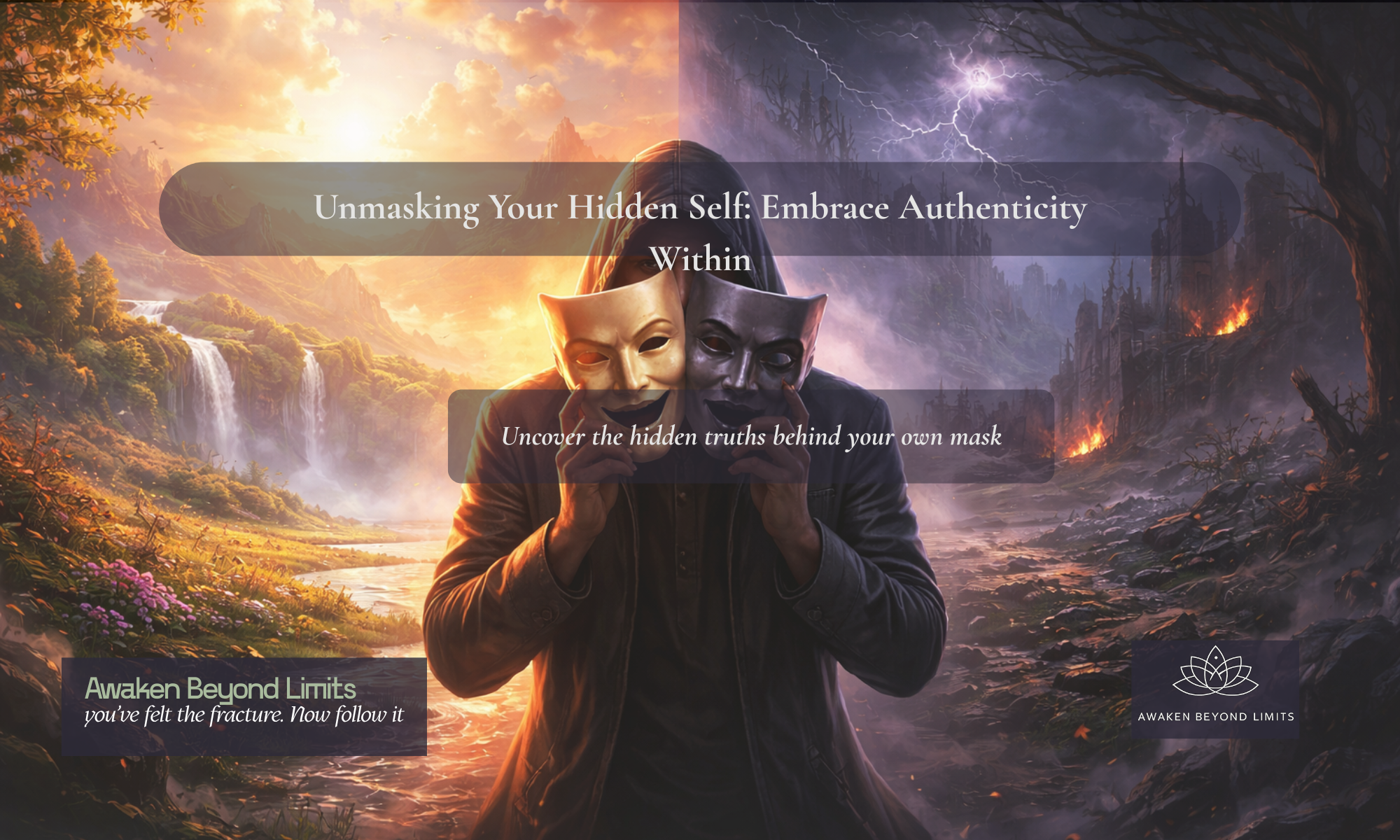
Unmasking Your Hidden Self: Embrace Authenticity Within
Uncover the hidden truths behind your own mask

Introduction
In the shadows of your mind, where whispers of doubt linger, lies a landscape of unacknowledged fears and desires. You navigate this dimly lit room, recognizing the contours of your own psyche, yet hesitating to step deeper into the shadows that flicker with unspoken truths. Here, in the quiet corners of your internal world, the weight of what you avoid becomes palpable—a tension that hums beneath your everyday façade.
But what if you dared to name that truth? What if the very things you keep at arm's length—the longings, the yearnings—are the keys to unlocking a more authentic self? It’s a revelation that resonates with unsettling clarity, stirring something deep within you, a recognition that might just crack open the protective shell you’ve carefully constructed.
I invite you to take a breath and lean in, to embrace the discomfort that accompanies the exploration of your hidden self. This isn’t merely a journey of consumption; it’s an invitation to confront what you've been running from, to finally face the mask you forgot you wear.
If you pause here, you might overlook the very change you’ve been craving.
And just beyond that threshold, the air feels charged, electric... as if something monumental is waiting to unfold.
Famous Quote
You reveal your true self by shedding the masks you wear.
This thought reflects the essence of "The Mask You Forgot You Wear." It invites introspection, encouraging individuals to recognize and discard the facades that obscure their authentic selves, ultimately fostering deeper connections and self-acceptance in the journey of life.
What Is In This Blog
What's Inside This Blog
- Uncover the masks you wear that may be hindering your true self.
- Explore how societal expectations shape your identity and behavior.
- Learn strategies to recognize and release these limiting beliefs.
- Feel empowered to embrace authenticity and self-expression.
- Discover practical steps to begin your journey of self-discovery.
How This Shows Up In Your Life
In the quiet corners of our lives, we often find ourselves donning masks—subtle, intricate façades that shield our true selves from the world. This theme, "The Mask You Forgot You Wear," invites us to explore the delicate interplay between our public personas and the vulnerabilities that lie beneath. These masks, crafted from layers of social expectations, past experiences, and survival instincts, can sometimes become so habitual that we forget they exist. We navigate our days, wrapped in these veils, obscuring our authentic selves, while simultaneously yearning for connection and understanding.
At the heart of this theme lies the concept of avoidance. We may wear a mask of confidence, projecting an image of control and success, while internally we wrestle with self-doubt and insecurity. This dissonance often leads to a profound sense of longing—an unfulfilled desire for authenticity and acceptance. The mask becomes a double-edged sword; it protects us from judgment but also distances us from genuine relationships. Imagine a workplace where one constantly smiles, exuding positivity, while beneath that cheerful exterior lies a sense of overwhelm and exhaustion. This dichotomy can leave individuals feeling isolated, as the mask prevents others from truly seeing their struggles.
Projection is another intricate dance within this theme. We often project our fears and insecurities onto others, interpreting their actions through the lens of our unhealed wounds. For instance, someone who feels inadequate may perceive a colleague's success as a threat, leading to jealousy or resentment. This projection can create a cycle of misunderstanding and disconnection, reinforcing the very isolation we seek to escape. It’s a vulnerable act, to peel back the layers and acknowledge the mask we wear, yet it is essential for fostering deeper connections.
Self-sabotage often rears its head when we are least aware. The very masks we create to protect ourselves can lead us into patterns of behavior that undermine our aspirations. By clinging to a façade of perfectionism, for example, we may shy away from opportunities that require vulnerability, fearing exposure over growth. In our quest to maintain these masks, we may inadvertently sabotage our relationships and dreams, entangling ourselves in a web of our own making.
As you reflect on your own life, consider the moments when you felt compelled to wear a mask. What emotions did you suppress? What truths did you hide? In these reflections, there lies an invitation to explore the deeper inquiries of your soul. Ask yourself: What would it feel like to take off the mask, even for a moment? How might your relationships shift if you allowed your authentic self to emerge?
In daily life, these masks can manifest in subtle yet profound ways—through the way we respond to compliments, the facade we maintain in social situations, or even the narratives we tell ourselves about our worth. Each choice can either reinforce the mask or invite authenticity. It is in the spaces where we dare to acknowledge the mask's presence that transformation begins. By gently peeling back the layers, we open ourselves to deeper connections, self-acceptance, and the possibility of living a life that resonates with our true essence. Embrace this journey inward, for within the shadows of your masks lies the vibrant light of your authentic self, waiting to be revealed.
Reflection: How Is This Showing Up For You?
What aspects of your life are you unconsciously masking, and how might embracing your true self transform your relationships and experiences?
Meditation Quote
You breathe deeply, releasing the weight of a mask
The Personal Effects
In the quiet corners of our daily lives, we often wear masks—those invisible layers we don to navigate the complexities of human interaction. These masks, while designed to protect us, can also obscure our true selves, creating a dissonance between who we are and how we present ourselves to the world. The theme of "The Mask You Forgot You Wear" invites us to explore the nuances of this phenomenon, delving into the intricate fabric of avoidance, projection, and the longing for authenticity that lies beneath the surface.
Consider the moments when you step into a room and instinctively adopt a persona, perhaps a confident smile or an air of indifference, shielding your vulnerabilities from the probing eyes of others. This mask serves a purpose; it shields your innermost fears and insecurities, allowing you to navigate social landscapes with a façade of ease. Yet, over time, the lines between the mask and your authentic self can blur, leading to a profound sense of isolation. The very act of self-protection can morph into self-sabotage, as the mask you wear becomes heavier, stifling your ability to connect deeply with others.
In our pursuit of acceptance, we occasionally project expectations onto those around us, hoping they will reflect back the image we so carefully crafted. This projection can create a cycle of longing, where we yearn for genuine connection while simultaneously keeping others at arm's length. The intricate dance of wearing a mask can leave us feeling trapped, caught in a web of our own making. The longing for true intimacy becomes overshadowed by the fear of vulnerability, leading us to ask ourselves, "What if they see me for who I really am?"
Imagine a typical day: you wake up, put on your mask, and step into the world. Perhaps you engage in small talk with a colleague, nodding along while your mind drifts to insecurities that remain unspoken. You laugh at jokes that don’t resonate with you, and when the day ends, you return home, feeling a subtle ache in your chest—a longing for something more genuine. This everyday scenario illustrates the quiet conflict within; the mask you wear may provide temporary comfort, but it ultimately distances you from the connections you crave.
As you navigate these feelings, consider what lies behind the mask. What fears and desires do you shield from the world? In moments of stillness, invite yourself to reflect on these questions: “What parts of me do I hide, and why?” “How does my mask serve me, and how does it limit me?” Allow these inquiries to unfold gently, creating space for insight and transformation.
In acknowledging the masks we wear, we embark on an inner journey towards authenticity. The process is not without discomfort; peeling back layers often reveals raw emotions and buried truths. However, it is in this vulnerability that we find the seeds of genuine connection. As we learn to embrace our true selves, we invite others to do the same, creating a ripple effect that fosters deeper relationships and a sense of belonging. The journey towards shedding the mask is a profound act of courage, one that ultimately leads us back to the heart of who we are—unmasked, unguarded, and beautifully human.
Reflection: Personal Effects
What aspects of your life have you unconsciously masked, and how might revealing your true self transform your relationships and experiences?
What It Really Is
The Mask You Forgot You Wear
Most definitions of "the mask you forgot you wear" are lies of omission—here’s what they leave out. They often paint a picture of mere pretense, suggesting that we wear masks to deceive others or to hide our true selves from a judgmental world. Yet, the deeper truth is that these masks can become so ingrained that we forget they are not our true identity. They are survival mechanisms, shaped by the conditioning of our culture, the expectations of society, and even past mistakes.
Imagine a reader archetype, someone who believes they have outgrown their childhood insecurities and societal pressures. They walk through life confidently, wearing their mask like a badge of honor. But one day, in the quiet moments of reflection, they realize that beneath this façade lies a deep-seated longing for authenticity. The mask has become a barrier, a prison of their own making, obscuring the vibrant soul within.
In this context, the mask isn't just a shield against the world; it's a doorway to self-discovery, vulnerability, and ultimately, transformation. It invites us to confront the hidden patterns beneath our behaviors—avoidance, projection, self-sabotage—each serving as a defense against the rawness of our true selves. The mask offers us comfort but also confines us in a loop of unfulfilling interactions and missed connections.
What if we paused to explore the underlying motivations for our masked existence? In your heart, what do you suspect is missing from how the world explains the mask you wear? This inquiry invites you to look inward, to unearth the parts of yourself that yearn for acknowledgment and acceptance.
By examining our masks, we can begin to understand the delicate balance between protecting ourselves and revealing our truths. Instead of viewing our masks solely as shields, we can see them as signposts guiding us toward deeper introspection. They reflect our fears, our desires, and the stories we tell ourselves about who we are.
As you navigate through this exploration, consider these quiet reflection prompts:
- What emotions arise when you think of the mask you wear?
- How has this mask shaped your relationships and perceptions of self-worth?
Allow these questions to settle within you, facilitating a compassionate disruption of the illusions that have long dictated your existence. This journey is not about discarding the mask entirely but about reclaiming the parts of yourself that have been hidden away. It’s about recognizing that while the mask may serve a purpose, it does not define your essence.
In this space of vulnerability and insight, you can begin to gently peel away the layers, revealing the authenticity that lies beneath. The mask you forgot you wear is not just a barrier; it is an invitation to return home to yourself, to embrace the beauty of imperfection, and to live a life of genuine connection and fulfillment.
Reflection: What This Is For You
What aspects of your identity have you unconsciously masked, and how might revealing them transform your understanding of self and connection with others?
Why This Matters
Why It Matters (The Turning Point)
In the journey of life, we often wear masks—those layers of protection that shield us from vulnerability and the rawness of our true selves. This week, we explore "The Mask You Forgot You Wear," a theme that invites you to confront the hidden patterns of avoidance and self-sabotage that may be silently eroding the fabric of your existence.
Imagine living in a state where you feel detached, as if watching your life unfold from behind a glass wall. The pain of staying asleep in this state is profound. Each day blurs into the next, and you become a mere spectator of your own story. You may find yourself projecting your fears onto others, longing for connection yet feeling isolated. This is the quiet suffering of ignoring the masks that you wear.
Now, envision a different path—one where you embrace the essence of your authentic self. Suddenly, the world around you transforms. Colors become more vibrant, relationships deepen, and a sense of freedom sweeps through your being. You begin to dismantle those barriers, allowing the light of your true self to shine through. This awakening is not just a moment; it’s a turning point that can reshape your reality.
Let’s pause for reflection: Imagine your life one year from now. What suffering dissolves if you claim your authentic self today? What hidden joys emerge when you peel back the layers of the mask?
As you navigate this inner journey, consider the scientific insights behind this transformation. Research shows that embracing authenticity can lead to greater emotional well-being and deeper connections with others. This is not just a philosophical idea but a profound truth backed by science.
As you reflect, ask yourself: “What parts of my life have I been avoiding?” and “How can I invite more authenticity into my everyday interactions?” By engaging with these prompts, you anchor your exploration in your personal reality, guiding yourself toward a more fulfilling existence. Embrace the journey of awakening; it is the most liberating choice you can make.
Reflection: Why This Matters To You
In the journey of self-discovery, how does acknowledging the masks we wear influence our ability to connect authentically with ourselves and others, and what might we uncover when we dare to remove them?
Meditation Quote
Awareness invites us to see beyond our own reflections
The Obstacles
In the journey of empowerment, many find themselves encumbered by self-doubt, the fear of failure, and the weight of societal expectations. These obstacles often masquerade as protective shields, yet they can suffocate our true potential, leaving us yearning for the freedom to be our authentic selves. The hidden patterns of avoidance and self-sabotage often keep us locked in cycles of longing, where the heart whispers for growth but the mind shouts for safety.
To dismantle these barriers, start by reframing your inner dialogue. Instead of saying, "I can't," transform it into, "What if I could?" This simple shift opens doors to possibilities. Secondly, cultivate a practice of vulnerability by sharing your fears with a trusted friend or mentor. Real-life examples abound: consider how J.K. Rowling faced numerous rejections before finding success. Her story reminds us that failure is often a stepping stone to greatness.
Engage in mindful reflection—ask yourself, "What fears are holding me back?" or "What does empowerment look like for me?" These moments of introspection weave the threads of our experiences into a tapestry of resilience, guiding us toward a more empowered existence.
The Science Behind It
Science Snapshot
The theme "The Mask You Forgot You Wear" invites us to explore our hidden selves, shaped by the interplay of our experiences and societal expectations. Neuroscience shows us that our brains have a remarkable ability called neuroplasticity, where they form new connections and pathways based on our thoughts and experiences [1]. This means that by consciously acknowledging and peeling back the masks we wear—like those of success, perfection, or avoidance—we can reshape our identities and enhance our resilience. The prefrontal cortex, responsible for decision-making and self-regulation, plays a crucial role here; when we face our vulnerabilities, we practice cognitive reappraisal, thereby transforming how we interpret our experiences [2].
Everyday Applications
- Reflect on a recent situation where you felt the need to wear a mask; journal about it.
- Practice vulnerability by sharing a small, authentic part of yourself with someone you trust.
- Set aside 5 minutes each day to meditate on your true feelings, without judgment.
Sources
[1] Doidge, N. (2015). The Brain That Changes Itself. Viking.
[2] Ochsner, K. N., & Gross, J. J. (2005). The cognitive control of emotion. Trends in Cognitive Sciences, 9(5), 242-249. DOI: 10.1016/j.tics.2005.03.005
Advanced Strategies
If you’ve read this far, you’ve proven you’re ready to delve into the advanced strategies that the awakened use. In a world that often feels chaotic and overwhelming, it’s easy to get lost in the masks we wear—performing for others, suppressing our true selves, and evading the whispers of our inner truth. Yet, beneath these layers lies a profound longing for authenticity, for connection to our deepest selves and to one another.
The techniques of the awakened are those that blend the ancient with the modern, inviting us to dance between the realms of ritual and practicality. Habit stacking, for instance, is a powerful tool. Imagine infusing your morning coffee ritual with a moment of gratitude—allowing the warmth of the cup to remind you of the abundance in your life. This simple act shifts your perception, setting the tone for the day ahead. You can also leverage neuropsych tools, like visualization or affirmations, to rewire your brain and create pathways toward the life you desire.
Yet, even as we adopt these strategies, we must remain aware of the hidden patterns that often govern our behaviors—avoidance, projection, and self-sabotage. These are the shadows that can creep in, whispering doubts and fears, urging us to stay small. Reflect for a moment: What are the masks you find yourself wearing? What aspects of yourself have you hidden away, and why? Invite these questions into your awareness, allowing them to guide your inner inquiry.
As you journey deeper into this exploration, consider the ancient wisdom of meditation and ritual. These practices ground us, offering a sanctuary amidst the noise of modern life. They remind us of the symbolism inherent in our experiences—the cycles of nature, the rhythm of the moon, the dance of the seasons. By aligning with these natural energies, we can cultivate a sense of harmony and balance within ourselves.
In this intimate space of reflection, I invite you to pause and listen. What would shift in your life if you trusted yourself to live at this level of awareness? Imagine the connections you could foster, the dreams you could pursue, the joy you could embrace. The awakened never walk alone; we are all part of a greater tapestry of souls seeking truth and freedom.
So, as you step into this next phase of your journey, remember that you are not isolated in your quest for awakening. Here’s where to find your tribe, a community that resonates with your spirit and supports your growth. Together, we can shed the masks and embrace the brilliance of our authentic selves.
Meditation Quote
I embrace the weight of unseen burdens, releasing them gently
Questions To Sit With
Consider how often you feel like you are hiding your true self. Are there specific situations where this feels more pronounced? Recognizing these moments can help you understand the underlying patterns.
Reflect on the roles you play in your daily life. Do you ever feel disconnected from who you really are while fulfilling these roles? This disconnection can reveal the masks you wear and why they might be necessary.
Think about your emotional responses when you interact with others. Are there times you feel you have to act in a way that doesn't align with your feelings? Noticing these instances can guide you in exploring authenticity in your relationships.
Milestones On This Journey
Milestone: Embracing Personal Agency
Why This Milestone Matters
Reaching this milestone signifies a profound internal shift—moving from a reactive mindset to one where you consciously choose your responses and actions. This transformation reshapes how you make decisions, infusing them with intention and clarity, ultimately directing your life with purpose rather than allowing external circumstances to dictate your path.
How to Reach It
To achieve this milestone, start by recognizing and confronting the obstacles that have previously limited your choices. Identify specific situations that trigger feelings of powerlessness or indecision. Then, apply advanced strategies such as reflective journaling to articulate your thoughts and feelings. This practice will help you clarify your values and priorities, providing a foundation for conscious decision-making. As you become more aware of your internal landscape, you will begin to see how your choices can align with your true self.
What Changes Once It’s Reached
Once you embrace personal agency, choices become more aligned with your values and aspirations. You will feel a notable increase in confidence and clarity when faced with decisions. Internal friction diminishes as you learn to trust your instincts and assess options based on your authentic self, rather than external pressures or expectations.
Measurement & Verification
You can gauge your progress toward this milestone through specific reflections in your journaling. Look for moments where you consciously choose to act rather than react. Notice any behavioral patterns that change—such as taking initiative instead of waiting for others to lead. Additionally, you should observe a reduction in hesitation when making decisions, indicating a newfound clarity and confidence.
Tools for Anchoring the Milestone
To stabilize and integrate this shift, consider using tools like decision logs to track choices and their outcomes. Engage in regular reflection prompts that encourage deeper understanding of your motivations and feelings. Habit tracking can also help reinforce this commitment to personal agency, making your conscious choices more habitual over time.
Frequently Asked Questions
Q: What is the main theme of "The Mask You Forgot You Wear"?
A: The main theme explores the identities and personas we adopt, often unconsciously, which can mask our true selves.
Q: How can I identify the masks I wear in my daily life?
A: Reflect on your behaviors and reactions in different situations; consider how they may differ from your authentic feelings and thoughts.
Q: What steps can I take to remove these masks?
A: Start by practicing self-awareness and vulnerability; share your true thoughts and feelings with trusted individuals.
Q: Why is it important to acknowledge the masks I wear?
A: Acknowledging these masks can lead to personal growth and deeper connections with others, fostering authenticity in relationships.
Q: How can this concept help me in my personal or professional life?
A: Understanding and addressing the masks you wear can enhance your communication and relationships, leading to more genuine interactions and improved well-being.
The Choice In Front Of You
You’ve already begun. You’ve already felt it. The only step left is to choose. Will you stay asleep, letting life drift by? Or will you wake up, embracing the change that awaits you?
The journey isn’t always easy, but it’s worth it. Comfort can feel good. It can feel safe. But comfort is a cage. Freedom is the open sky.
I’ll walk with you as you rise. Together, we’ll shed the masks that hide our true selves. Together, we’ll break free from the patterns that hold us back.
Right now—what will you choose? Comfort, or freedom?
The choice is yours. Choose wisely. Choose to awaken. Choose to live.
A Personal Message
Life has a way of piling on responsibilities, leaving little room for the essentials like therapy or self-care. I often find myself caught in the whirlwind of daily tasks, feeling the weight of unmet needs pressing down on me. There’s a nagging voice in the back of my mind reminding me of the importance of checking in with myself, yet I push it aside, prioritizing everything else. The days blur into one another, each moment filled with obligations that seem more pressing than my own emotional well-being.
As time goes on, I notice the cracks beginning to show. I feel irritable and disconnected, as if I’m merely existing rather than truly living. It’s in these moments of quiet desperation that I confront the reality of my situation. I realize that ignoring my mental health is not a solution, but rather a path to further exhaustion. I start to question why I allow my own needs to take a backseat to everything else. It’s a humbling moment, facing the truth that I can’t pour from an empty cup.
Slowly, I begin to shift my perspective. I allow myself to carve out small moments in my day for reflection and care, even if they are brief. I start to see these acts not as indulgences, but as necessities. They become my quiet rebellion against the chaos. With each small step I take toward prioritizing myself, I feel a sense of clarity returning. I’m learning that acknowledging my needs doesn’t make me selfish; it makes me human. In this journey, I discover that taking time for myself is not just allowed—it’s essential for my well-being.
Resources
- The Hidden Chamber Store: Explore various products related to self-discovery and personal growth at The Hidden Chamber.
- The Threshold Podcast: Listen to insightful discussions on awakening and personal development at The Threshold.
- The Obsidian Mirror Blog: Read articles focused on self-exploration and transformation at The Obsidian Mirror.
- Awaken Beyond Limits Website: Visit Awaken Beyond Limits for resources and tools to enhance your journey towards personal awakening.
- Quora Community: Engage with topics and questions related to personal growth at Awaken Beyond Limits Quora.